Introduction
Rainwater harvesting is a sustainable water management practice that involves collecting, storing, and using rainwater for domestic, agricultural, industrial, and environmental purposes. As freshwater resources face increasing pressure from population growth, urbanization, climate change, and over-extraction, rainwater harvesting offers a practical and cost-effective solution to supplement existing water supplies.
Rainwater is a naturally occurring, relatively clean source of water that often goes unused as runoff. By capturing rainwater from rooftops, open surfaces, and catchment areas, communities and households can reduce dependence on municipal water systems and groundwater sources. Rainwater harvesting not only conserves water but also reduces flooding, soil erosion, and stormwater pollution.
This article explores the principles, components, methods, benefits, and applications of rainwater harvesting, highlighting its importance as a key strategy for sustainable water conservation.
Importance of Rainwater Harvesting
Rainwater harvesting plays a crucial role in addressing water scarcity and promoting sustainable water use. Its importance includes:
- Water Conservation: Captures rainwater that would otherwise be lost as surface runoff.
- Groundwater Recharge: Reduces over-extraction of groundwater by providing an alternative water source.
- Flood and Runoff Control: Decreases stormwater runoff in urban areas, reducing flooding and erosion.
- Energy Savings: Lowers energy demand for pumping, treatment, and distribution of water.
- Climate Resilience: Enhances water security during droughts and irregular rainfall patterns.
By utilizing rainwater efficiently, communities can improve water availability while protecting natural ecosystems.
Principles of Rainwater Harvesting
Rainwater harvesting is based on the simple principle of collecting and storing rainfall from suitable catchment surfaces for later use. The effectiveness of a system depends on rainfall patterns, catchment area, storage capacity, and intended use.
Key principles include:
- Maximizing collection efficiency
- Preventing contamination during collection and storage
- Matching storage capacity to rainfall and demand
- Using harvested water appropriately based on quality
Proper design ensures reliable performance and long-term sustainability of rainwater harvesting systems.
Components of a Rainwater Harvesting System
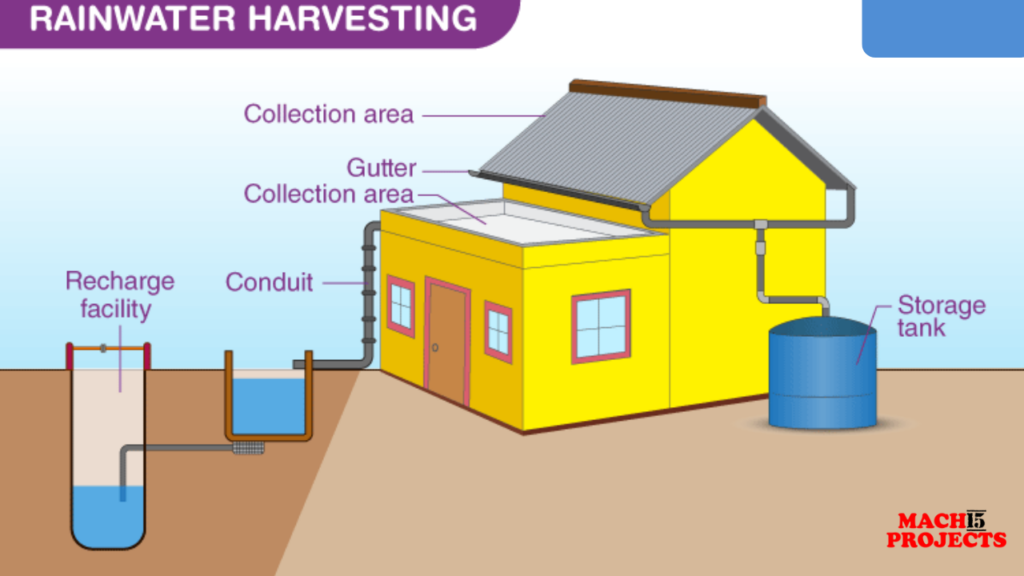
A typical rainwater harvesting system consists of the following components:
Catchment Area
The catchment area is the surface on which rain falls and from which it is collected. Rooftops made of metal sheets, tiles, or concrete are commonly used due to their smooth surfaces and relatively clean runoff.
Conveyance System
Gutters, downpipes, and channels transport rainwater from the catchment area to the storage system. Proper slope and secure fittings are essential to ensure efficient flow and prevent leakage.
First-Flush Device
First-flush devices divert the initial portion of rainfall, which may contain dust, debris, and contaminants, away from the storage tank. This improves the quality of collected water.
Filtration Unit
Filters remove suspended solids, leaves, and other impurities before water enters the storage tank. Common filtration methods include mesh filters, sand filters, and charcoal filters.
Storage Tank
Storage tanks hold collected rainwater for future use. Tanks may be constructed from plastic, concrete, fiberglass, or metal and can be installed above ground or underground, depending on space and usage requirements.
Distribution System
The distribution system delivers stored rainwater to points of use. Depending on the application, water may be supplied by gravity or with the help of pumps.
Types of Rainwater Harvesting
Rooftop Rainwater Harvesting
Rooftop rainwater harvesting involves collecting rainwater from building roofs and storing it for direct use or groundwater recharge. This method is widely used in residential, institutional, and commercial buildings.
Surface Runoff Harvesting
Surface runoff harvesting captures rainwater flowing over open land, roads, or paved surfaces. The collected water is stored in ponds, tanks, or reservoirs and is commonly use for irrigation and groundwater recharge.
Applications of Rainwater Harvesting
Rainwater harvesting can be used for a wide range of purposes, including:
- Domestic uses such as flushing toilets, cleaning, and gardening
- Agricultural irrigation and livestock watering
- Industrial cooling, cleaning, and process water
- Groundwater recharge through recharge pits and wells
- Urban landscaping and green spaces
When properly treated, harvested rainwater can also be use for potable purposes in some settings.
Benefits of Rainwater Harvesting
The benefits of rainwater harvesting include:
- Reduced dependence on municipal water supplies
- Lower water and energy costs
- Improved groundwater levels
- Reduced stormwater runoff and pollution
- Increased water availability during dry periods
These benefits make rainwater harvesting an effective solution for both urban and rural water management.
Maintenance and Water Quality Considerations
Regular maintenance is essential to ensure system efficiency and water quality. Maintenance activities include:
- Cleaning roofs and gutters
- Inspecting and cleaning filters
- Checking storage tanks for leaks or contamination
- Ensuring mosquito-proof covers and screens
Water quality requirements depend on the intended use. Simple filtration is sufficient for non-potable uses, while additional treatment may be require for drinking water.
Rainwater Harvesting and Sustainability
Rainwater harvesting supports sustainable development by promoting efficient resource use and reducing environmental impacts. It complements other water conservation strategies and enhances resilience to climate change.
By integrating rainwater harvesting into building design and urban planning, communities can move toward more self-sufficient and sustainable water systems.
Conclusion
Rainwater harvesting is a practical, environmentally responsible, and cost-effective approach to water conservation. By capturing and utilizing rainwater, households, industries, and agricultural operations can reduce pressure on freshwater resources, lower energy consumption, and improve water security.
As water scarcity challenges continue to grow, rainwater harvesting will play an increasingly important role in sustainable water management. Widespread adoption of this practice can contribute significantly to long-term environmental protection and resource resilience.